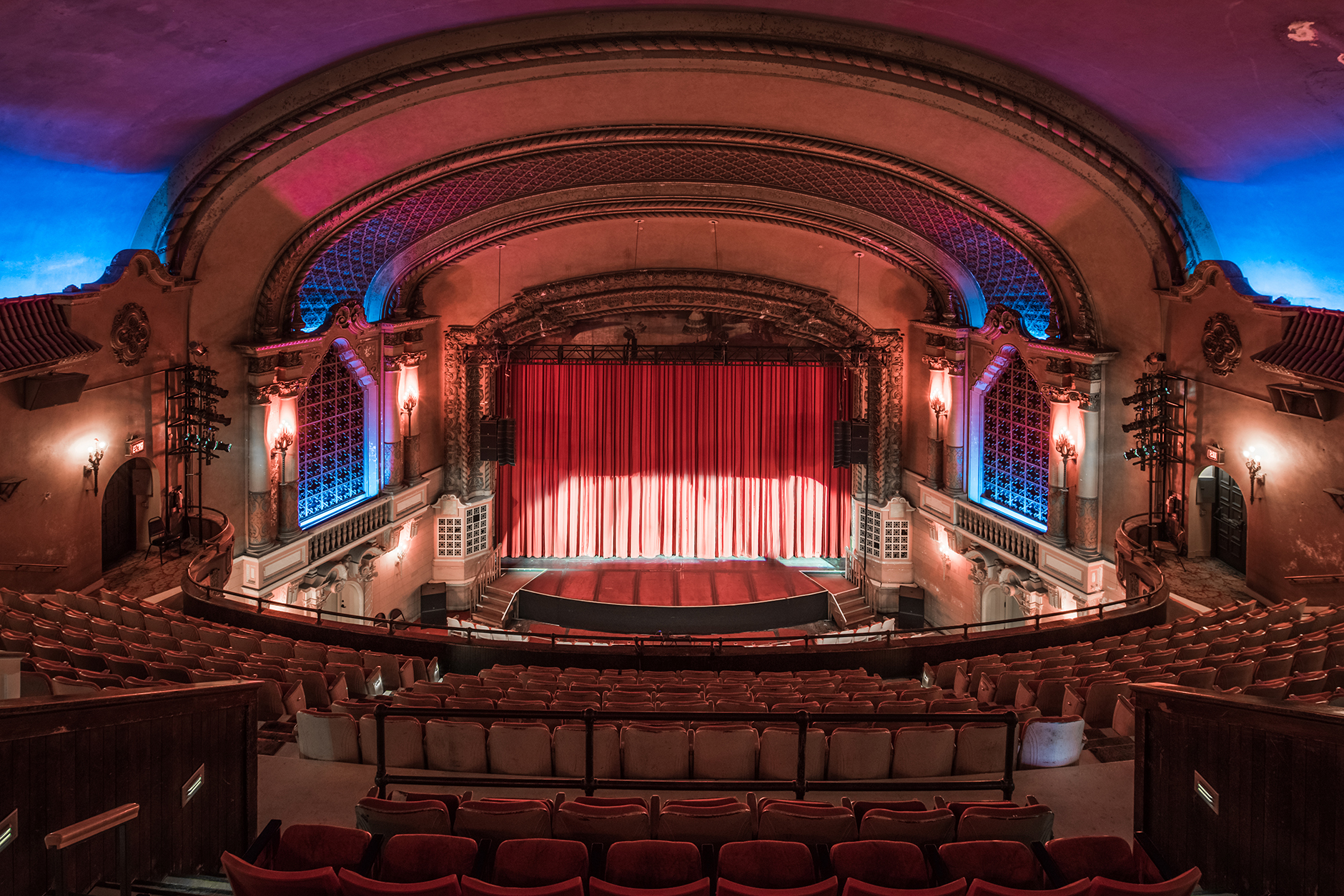
Wichita's Orpheum Theatre, dark for 15 months while crews overhauled its 104-year-old interior, reopens Aug. 30 with a sold-out John Legend concert.
The $13 million restoration at 200 N. Broadway replaced all 1,286 seats, repainted crumbling plasterwork, installed new carpet on the mezzanine and brought in an acoustician to refine the theater's sound, the Wichita Eagle reported after a Aug. 27 media walkthrough.
The original twinkling ceiling lights, designed in 1922 to replicate the night sky, are shining again. So is the hand-painted fire curtain. Executive Director Stacee Olden called those two pieces the most historically significant in the building.
"I never doubted for a minute it would happen," Olden said during the walkthrough. "That feels like a pretty good win."
Crews also eliminated what was known as "the uneven slope of doom" on the main floor, replacing the steep pitch with a new set of partial stairs. A cocktail bar was added in the back of the house, and basement dressing rooms were redone.
The Orpheum was built in 1922 with an "atmospheric" interior meant to resemble a Spanish courtyard. George Burns and Gracie Allen, Harry Houdini, Ella Fitzgerald and Louis Armstrong all performed there in its early decades.
The theater closed in 1976 and was targeted for demolition before citizens got it added to the National Register of Historic Places in 1980. Groups have been planning and fundraising for a full restoration since 1991.
Olden, who joined as director of development in 2021 and became executive director in 2024, announced in September 2024 that the Orpheum had finally raised enough money to finish the job. Of the 100 Orpheum theatres that once existed on the vaudeville circuit, only 17 remain. Wichita's was the last one that had not been restored.
About 350 people attended preview parties before the public opening. A ticketed reopening celebration is set for Friday, Sept. 4; tickets cost $20. Olden said she plans to begin monthly public tours of the restoration sometime in 2027.
One piece of work remains: backstage rigging still needs to shift from hemp-and-sandbag to mechanical. Olden said that transition will happen in the near future. The theater also plans to start an endowment fund for ongoing maintenance, with some funding from tax credits.