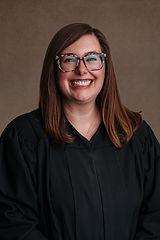
Kathleen Watson is seeking retention as Kansas District Court judge for the 18th Judicial District, Division 15, in the Nov. 3 general election. Watson, a Republican, said in our questionnaire that no other candidates are seeking the position.
Asked why she is running, Watson said, "I am seeking retention of my current position as a District Court Judge."
Gov. Laura Kelly appointed Watson to the bench on May 9, 2025, to fill a vacancy created by the retirement of Judge David J. Kaufman, according to the governor's office. District court judges in the 18th Judicial District serve four-year terms.
Candidate information
Party: Republican
Education: Watson said in our questionnaire, "University of Illinois at Urbana-Champaign - undergraduate; and University of Kansas - law school."
Family: Watson said, "I am celebrating my first anniversary with my husband, Nick, this weekend!"
Family in government: Watson said, "My sister-in-law works for the Federal government."
Experience and public service
Watson described her work history in our questionnaire: "Prior to being a judge, I was an attorney for Kansas Legal Services. In 2023, I was appointed to be the Magistrate Judge for the 18th Judicial District. I've served as a District Court Judge since May 2025."
Her current assignment is civil cases at the 18th Judicial District Court, Division 15, at the Sedgwick County Courthouse in Wichita. Watson also serves on the Eviction Practices Committee and the Judicial Education Advisory Committee, according to the governor's office.
Asked about accomplishments that show she can handle the job, Watson said, "I am most proud of my past work with Kansas Legal Services. I represented people from all walks of life, handled a huge volume of cases, and practiced a wide variety of law."
On the issues
How experience at Kansas Legal Services shapes her judging: Watson said, "My time at KLS deepened my understanding of the barriers that many people face, not only in accessing the justice system, but also when they leave my courtroom. I think that experience provides context, combats biases, and presents opportunities for creative legal solutions. When I became a judge, I worked really hard to make sure that I was very familiar law that applied to each case and meticulously followed it. Judges who are meticulous about following the rules and the law help ensure impartiality."
Lessons from hearing cases with unrepresented parties: As a magistrate judge, Watson oversaw evictions, collections and small claims cases in Sedgwick County. She said in our questionnaire, "About 99% of the cases that I heard as a magistrate judge involved one or more unrepresented parties … Some of the changes that I implemented on these dockets were making announcements at all of my dockets so that everyone knew what to expect, made sure that I read everything that was submitted to the court because sometimes litigants' thoughts were clearer in writing than when they were in court, and explained my rulings as much as possible."
Watson added, "If I could make a universal change, I would probably consolidate and promote all of the resources available to pro se litigants so they were not overwhelmed with information and knew where to find it easier."
On impartiality and party labels in a judicial role: Watson said, "Being a Republican appointed by a Democratic governor is a testament to the importance of impartiality in the judiciary … But as a Republican and a Catholic, I conveyed my strong belief in the importance of serving others and recognizing that our lives and work are part of something greater than ourselves."